

In a world where even your fridge can send you a reminder to buy more milk, it’s no surprise that health monitoring has joined the Internet of Things (IoT) revolution. Imagine a future where your smartwatch not only tracks your steps but also gives you a gentle nudge to swap that donut for a salad—while making a witty remark about your snack choices.
Overview of IoT Health Monitoring
IoT health monitoring refers to the use of connected devices to continuously track health metrics. These devices, often worn on the body or embedded in daily items, provide real-time data on various health indicators. Examples include smartwatches that monitor heart rates, blood pressure monitors, and glucose trackers.
Health professionals rely on this data to enhance patient care. Real-time feedback enables timely interventions and personalized health recommendations, drastically improving patient outcomes. With systems integrated into mobile apps, individuals can access their health data anytime.
Data analytics plays a crucial role in IoT health monitoring. Advanced algorithms analyze collected information to identify trends and predict potential health issues. This predictive capability allows individuals to take proactive measures, fostering a healthier lifestyle.
Security and privacy remain essential concerns in IoT health monitoring. Sensitive health information requires robust encryption and compliance with regulations like HIPAA. Patients must trust that their data is secure to fully benefit from these technologies.
Deployment of IoT health monitoring has expanded beyond individual use. Healthcare providers utilize connected devices for remote patient monitoring, reducing hospital visits and ensuring consistent care. Telemedicine platforms integrate these devices, enabling doctors to monitor patients’ conditions effectively.
IoT health monitoring continues to transform healthcare delivery. Its ability to provide actionable insights based on real-time data supports preventive health measures and personalized care. As technology evolves, the potential for smarter health solutions increases significantly.
Key Technologies in IoT Health Monitoring
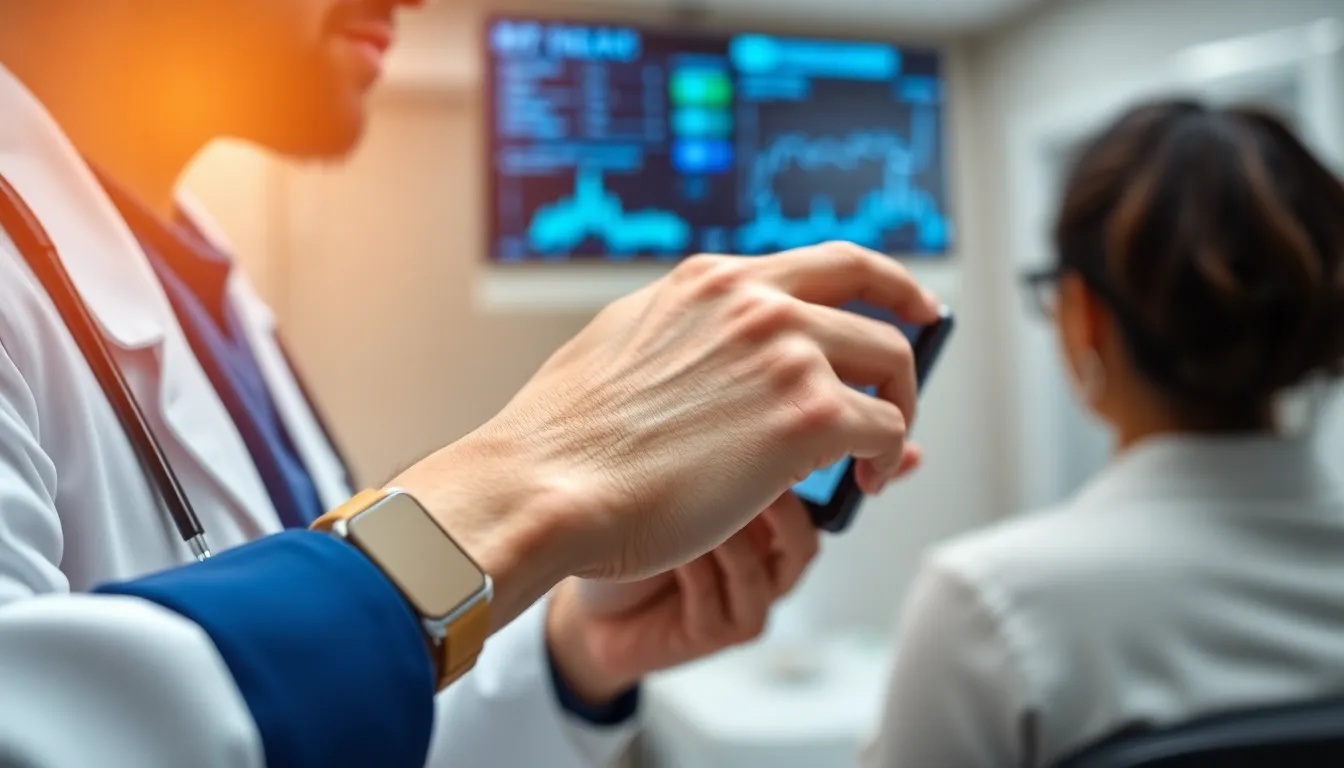
IoT health monitoring relies on various technologies to deliver effective health management solutions. These innovations enhance patient care and facilitate data collection for improved health outcomes.
Sensors and Wearables
Sensors and wearables form the backbone of IoT health monitoring. Smartwatches, fitness trackers, and medical-grade sensors measure vital signs such as heart rate, respiratory rate, and blood glucose levels. Data from these devices provides continuous health insight. Wearables offer convenience, allowing individuals to track their well-being anytime, anywhere. Advances in sensor technology ensure accuracy and reliability, making these devices invaluable for both users and healthcare practitioners.
Data Transmission Methods
Data transmission methods connect IoT devices to healthcare systems and applications. Various technologies, including Bluetooth, Wi-Fi, and cellular networks, facilitate real-time data transfer. These methods enable seamless communication between wearables and smartphones or cloud-based platforms. Low-power wide-area networks (LPWAN) support long-range communication while preserving battery life. Timely data transmission is crucial for monitoring health changes and allows healthcare professionals to intervene quickly. Each method plays a vital role in shaping the efficiency of IoT health monitoring systems.
Benefits of IoT Health Monitoring
IoT health monitoring brings significant advantages that transform healthcare experiences for both patients and providers.
Enhanced Patient Care
IoT devices improve the quality of patient care by providing real-time data for health professionals. Smartwatches and glucose trackers continuously monitor vital signs, ensuring timely interventions. Patients benefit from personalized insights tailored to their unique health needs. Health providers can analyze trends and adjust treatment plans based on continuous data. This proactive approach supports immediate responses to potential health issues. Overall, IoT health monitoring leads to better health outcomes through continuous engagement and timely medical advice.
Improved Efficiency for Healthcare Providers
Healthcare providers experience heightened efficiency through IoT health monitoring systems. Real-time data collection reduces administrative burdens and streamlines communication. Flexible telemedicine platforms enable remote consultations, decreasing the need for in-person visits. Providers gain access to comprehensive health metrics without overwhelming paperwork. Additionally, this efficiency allows for better resource allocation across healthcare systems. Enhanced data sharing helps providers coordinate care more effectively, leading to significant time savings and improved patient management.
Challenges and Considerations
IoT health monitoring faces various challenges that can hinder its effectiveness and adoption. Significant concerns revolve around data security and privacy, which are paramount in healthcare.
Data Security and Privacy Concerns
Data privacy poses a critical issue for IoT health monitoring. IoT devices collect sensitive health information, making them attractive targets for cyberattacks. Strong encryption methods protect this data, but compliance with regulations like HIPAA ensures further safeguards. Organizations must implement robust security measures to mitigate risks. Patients require assurance that their health metrics remain confidential. Regular audits and updates also play a crucial role in maintaining trust and protecting sensitive information.
Technical Limitations and Reliability
Technical limitations can impact the reliability of IoT health monitoring systems. Network connectivity issues may result in data loss or delays. Device accuracy is vital, as inaccurate readings lead to improper medical decisions. Regular maintenance and updates can enhance device performance. Interoperability among various devices presents another challenge. Ensuring compatibility allows systems to communicate seamlessly, providing comprehensive patient insights. Continuous innovation in technology is essential to overcome these barriers and improve overall system reliability.
Future Trends in IoT Health Monitoring
Emerging technologies will shape the future of IoT health monitoring. Predictive analytics tools, powered by artificial intelligence, enhance the ability to foresee potential health issues by analyzing vast amounts of patient data. These tools transform insights into actionable recommendations for both patients and healthcare providers.
Wearable devices are evolving to include advanced biometrics. Next-generation sensors can monitor stress levels and hydration, offering a fuller picture of a person’s health status. These innovations empower users to take charge of their health with more comprehensive data.
Integration with telemedicine continues to grow, allowing healthcare professionals to monitor patients remotely. Such integration bridges the gap between in-person visits and virtual care, ensuring patients receive timely interventions. Remote monitoring fosters a supportive environment that enables continuous healthcare management.
Patient engagement will also see a boost through gamification strategies. Utilizing game elements in health apps encourages users to adhere to health and fitness goals, making wellness a more interactive experience. Engaging platforms increase users’ motivation and promote healthy behaviors.
Data security measures are set to advance in response to cybersecurity threats. Robust encryption protocols will enhance the protection of sensitive health information stored within IoT devices. Regulatory compliance will remain a priority to assure users’ trust.
Lastly, emphasis on interoperability among diverse health systems is becoming crucial. Ensuring that various devices can communicate effectively expands the utility of health monitoring systems. Seamless data sharing results in a more holistic view of patient health, enabling more informed decision-making by providers.
Conclusion
The future of IoT health monitoring is bright and filled with possibilities. As technology advances smart devices will continue to evolve providing deeper insights into individual health. These innovations empower patients and healthcare providers alike to make informed decisions that lead to better health outcomes.
The integration of advanced analytics and telemedicine will enhance the ability to monitor health remotely ensuring timely interventions. While challenges like data security and interoperability remain significant they also drive the need for robust solutions.
Ultimately IoT health monitoring stands to revolutionize healthcare delivery making it more personalized efficient and proactive. Embracing these technologies is key to unlocking a healthier future for everyone.


