

Imagine a home that knows you better than your best friend. With the rise of the Internet of Things (IoT), smart homes are transforming everyday living into a high-tech adventure. From fridges that remind you to buy milk to lights that dim at the perfect moment, these gadgets are designed to make life easier, more efficient, and a bit more fun.
But it’s not just about convenience; it’s about creating a space that feels personalized. As IoT devices connect and communicate, they’re turning houses into intelligent environments that adapt to their owners’ needs. So, why not embrace the future? Let’s dive into how IoT is revolutionizing smart homes and why it’s time to upgrade your living experience. After all, who wouldn’t want a home that’s as smart as they are?
Overview of IoT in Smart Homes
The Internet of Things (IoT) significantly impacts smart homes by connecting devices seamlessly. Smart devices like thermostats, security cameras, and appliances now communicate with each other and their users. Automation becomes more common, allowing homeowners to control settings remotely through smartphones or voice commands.
Home security systems illustrate IoT’s effectiveness in smart environments. Smart locks enable users to grant access remotely, while cameras provide live feeds and alerts. Data from these devices enhances security measures, offering peace of mind.
Energy efficiency improves with smart lighting and heating solutions. Smart bulbs adjust brightness based on natural light and occupancy, while smart thermostats optimize heating and cooling based on usage patterns. This not only saves money but also reduces environmental impact.
User personalization benefits from IoT technology. Smart devices learn preferences over time, adjusting settings for optimal comfort and convenience. For example, smart refrigerators can track food inventory and suggest recipes based on available ingredients.
Connectivity enhances the overall smart home experience. Devices interlink within a network, allowing for coordinated actions. A morning routine might include gradual lighting, a brewed coffee, and a weather update, creating an efficient start to the day.
Overall, IoT in smart homes transforms daily living into a more connected, efficient, and secure experience. The integration of advanced technologies simplifies tasks, making life more convenient for homeowners.
Key Technologies Behind IoT in Smart Homes
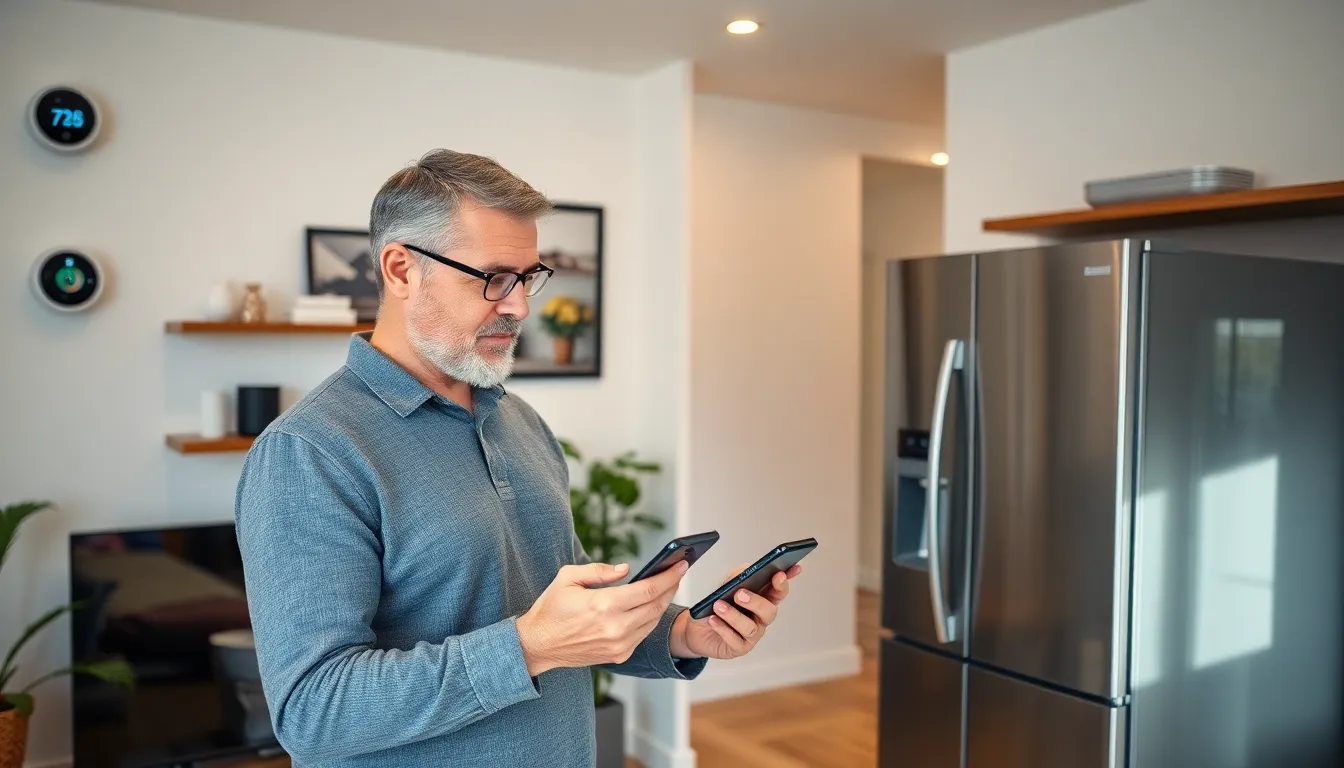
IoT in smart homes relies on several key technologies that enhance home automation and user experience.
Sensors and Devices
Smart homes utilize various sensors and devices to create an interconnected environment. Temperature sensors monitor room conditions and adjust smart thermostats for optimal comfort. Motion detectors enhance security systems by alerting users of unexpected movement. Smart appliances, such as refrigerators, track food inventory and suggest recipes based on available ingredients. Smart lighting systems respond to occupancy, providing illumination only when necessary, which conserves energy. Smart speakers allow users to control devices with voice commands, streamlining interaction and access to information. Each of these devices contributes uniquely, ensuring homeowners enjoy a seamless, integrated daily experience.
Connectivity Protocols
Connectivity protocols play a crucial role in the effectiveness of smart home systems. Wi-Fi serves as the backbone for many smart devices, offering a reliable internet connection for remote access. Zigbee provides a low-power communication option, making it ideal for battery-operated sensors. Z-Wave focuses on short-range communication, ensuring quick response times for devices like smart locks and lights. Bluetooth connects devices for short-distance control, often used in wearable gadgets. Thread is emerging as a protocol, enhancing efficiency and security by creating a mesh network among devices. These protocols enable diverse devices to communicate effectively, creating a cohesive smart home ecosystem.
Benefits of IoT in Smart Homes
IoT offers numerous advantages for smart homes, enhancing quality of life through improved security and energy efficiency.
Enhanced Security
Smart security systems provide real-time monitoring and alerts. With cameras and motion detectors, homeowners gain instant notifications when unusual activity occurs. Smart locks ensure only authorized users access the home. Remote management of these devices enhances safety, as users can monitor their homes from anywhere. Integration of security devices creates a cohesive system that responds automatically to threats, increasing peace of mind. Additionally, advanced features such as facial recognition add a layer of personalization, allowing for tailored home access. A significant reduction in break-ins correlates with the adoption of smart security measures, making IoT essential for today’s security needs.
Energy Efficiency
Smart homes optimize energy use through intelligent devices. Smart thermostats adjust heating and cooling based on real-time conditions and homeowner preferences, resulting in reduced energy bills. Energy-efficient lighting systems react to natural light and occupancy, minimizing waste. Data analytics allow homeowners to track usage patterns to identify opportunities for further savings. Integrating devices like smart plugs and appliances fosters a more energy-conscious environment. Adopting smart technology can lead to up to 30% savings on energy costs annually. Enhanced energy efficiency not only lowers expenses but also benefits the environment by reducing overall consumption.
Challenges and Limitations
Despite the benefits of IoT in smart homes, several challenges exist that can hinder user experience and security.
Privacy Concerns
Devices often collect vast amounts of personal data, raising significant privacy concerns for homeowners. Unauthorized access to these devices can lead to data breaches and compromised security. For instance, smart cameras and voice-activated assistants continuously listen for commands, creating potential vulnerabilities. Users must remain vigilant about privacy settings and data sharing policies. Companies storing such sensitive information also need stricter security measures to protect user privacy. Clear communication about data handling practices can foster trust between manufacturers and consumers.
Interoperability Issues
Many smart devices rely on different protocols and standards, resulting in interoperability issues. Compatibility problems can frustrate users when attempting to integrate various systems into a cohesive smart home setup. For example, a thermostat from one brand may not communicate effectively with lighting systems from another. As a result, homeowners may face limitations in automation and control features. Industry-wide standards can enhance device compatibility, but until then, individuals must research options thoroughly before purchasing. Ensuring functionality between diverse devices significantly influences the overall smart home experience.
Future Trends in IoT for Smart Homes
Predictions indicate a surge in artificial intelligence integration within smart home devices. Intelligent systems will analyze user behavior, adjusting settings automatically for optimal comfort and efficiency. Increased personalization capabilities may enhance user experiences, allowing devices to anticipate needs based on past interactions.
Enhancements in voice recognition technology will enable more intuitive user interfaces. Homeowners will enjoy seamless control of devices through natural language commands, reducing reliance on specific phrases. This improvement could streamline daily routines, making smart homes even more accessible.
The growing emphasis on sustainability will shape future IoT developments. Energy-efficient devices that monitor consumption could allow users to manage their energy footprints effectively. Reports suggest potential savings of 30% in energy costs, thereby incentivizing homeowners to adopt greener technologies.
Next, improved interoperability among devices will emerge as a critical trend. Standardized protocols will facilitate communication across different brands and systems, promoting a more cohesive smart home ecosystem. The elimination of compatibility issues may enhance automation and integration, resulting in smoother operations.
Robust security measures will gain importance to address rising privacy concerns. Manufacturers might prioritize encryption and data protection to build consumer trust. Security advancements may include biometric features, ensuring that access to smart devices remains controlled and secure.
Lastly, advancements in network technology, such as 5G, will boost connectivity and reliability. Faster data transmission will support real-time communication between devices, enhancing responsiveness and functionality. The overall efficiency of smart homes could see significant improvements, elevating user experiences further.
Conclusion
The rise of IoT in smart homes is reshaping the way people live. With enhanced convenience security and energy efficiency smart devices are becoming indispensable. As technology continues to evolve homeowners can expect even greater integration and personalization in their living environments.
While challenges like privacy concerns and interoperability exist the benefits far outweigh the drawbacks. By staying informed and proactive homeowners can navigate these issues effectively. Embracing smart home technology not only enhances daily life but also contributes to a more sustainable future. The journey toward a smarter home is just beginning and the possibilities are endless.


