

In a world where your toaster can chat with your fridge, IoT rule engines are the unsung heroes making sense of the chaos. These clever systems take the guesswork out of smart device interactions, ensuring your home runs smoother than a well-oiled machine—or at least smoother than your last attempt at baking a soufflé.
Imagine a scenario where your coffee maker knows exactly when to brew that perfect cup, all thanks to a rule engine working behind the scenes. It’s not magic; it’s just smart technology doing its thing. As the Internet of Things continues to grow, understanding how these rule engines operate becomes essential for anyone looking to harness the full potential of their connected devices. Get ready to dive into the fascinating world of IoT rule engines and discover how they can transform everyday life into a seamless, automated experience.
Overview of IoT Rule Engines
IoT rule engines serve as the backbone of device interaction within smart environments. They analyze data from various sensors and devices to establish automated responses based on pre-defined rules. These rules dictate behavior and actions, enabling devices to operate seamlessly together.
Rule engines leverage event-driven architectures to react promptly to changes in their environment. For instance, a temperature sensor might trigger an air conditioning unit to activate when the indoor temperature exceeds a specific threshold. This real-time assessment conserves energy and enhances user comfort.
Functionality extends beyond simple device triggers. Complex event processing allows IoT rule engines to analyze multiple inputs from various sources simultaneously. By integrating data from security cameras, door sensors, and motion detectors, the system can determine if someone is at the door and notify the homeowner through a mobile app.
Most IoT rule engines follow logic-based models, such as if-then statements. An example includes turning on outdoor lights at dusk and off at dawn. These straightforward rules simplify programming for non-technical users while ensuring efficient operations.
Scalability remains a significant attribute. As new devices connect, the rule engine adapts to accommodate additional rules and interactions. This flexibility ensures that smart environments evolve alongside user preferences and technological advancements.
Many existing solutions provide customizable rule sets tailored to individual needs. Users may adjust parameters, enabling personalized experiences that enhance the functionality of connected devices. By prioritizing user control, IoT rule engines foster a more intuitive and responsive smart home experience.
Key Features of IoT Rule Engines
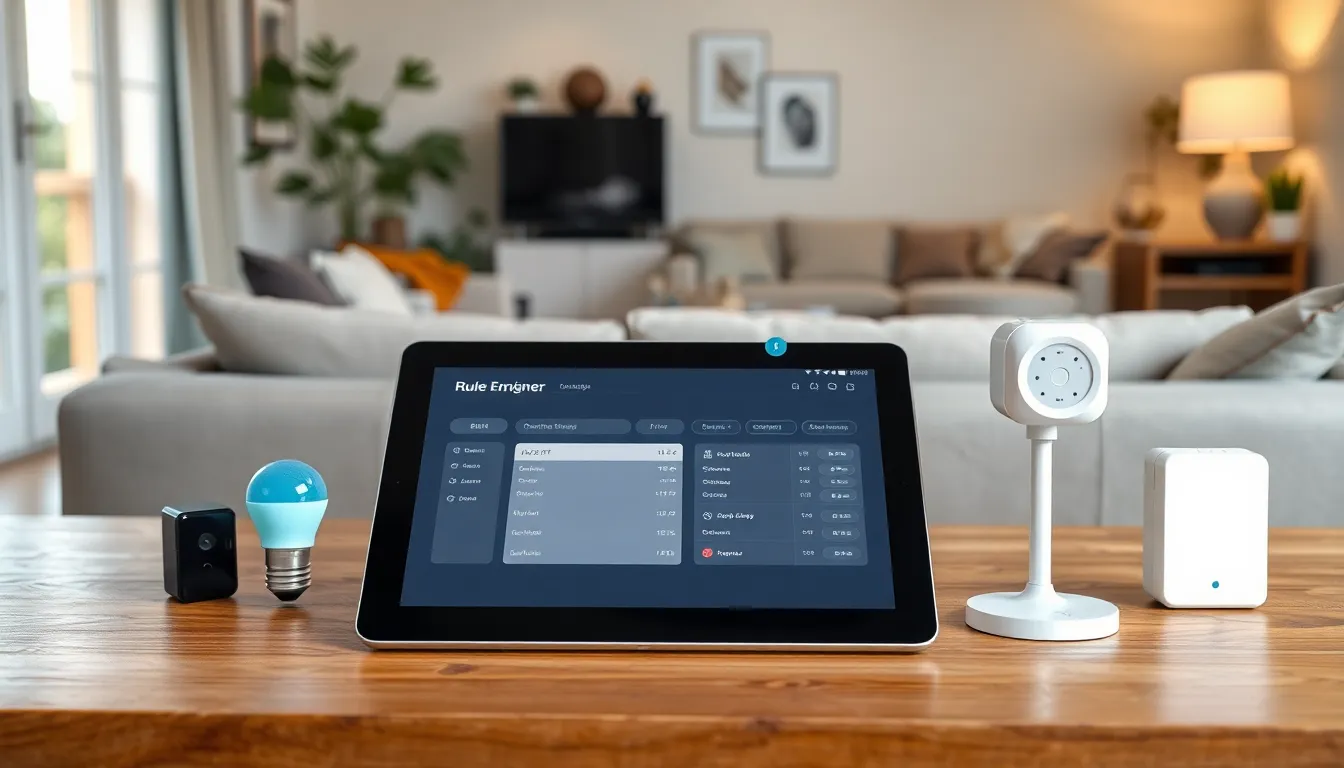
IoT rule engines possess several key features that enhance their functionality and efficiency in smart environments. Users benefit from these characteristics as they maximize the potential of connected devices.
Scalability and Flexibility
Scalability enables IoT rule engines to grow and adapt alongside expanding device ecosystems. They seamlessly accommodate the addition of new devices, which is critical as users’ needs evolve. Flexibility also allows customization of rule sets to match specific preferences. This adaptability fosters personalized experiences while ensuring regulated interactions among devices. Many rule engines support integration with various protocols, enhancing their ability to communicate effortlessly. Users appreciate having varied options to tailor their smart homes. Accessibility becomes a significant advantage as non-technical users navigate these systems with ease.
Real-time Processing
Real-time processing is essential for maintaining smooth interactions between devices. Rule engines analyze data instantaneously, ensuring rapid responses to changing conditions. For instance, if a motion detector senses movement, a connected security camera might upload footage immediately. Delays can result in missed opportunities, making swift processing a top priority. Event-driven architectures enhance responsiveness by triggering actions based on specific conditions or thresholds. This functionality supports functionalities like adjusting lighting based on ambient light levels, promoting energy efficiency. The ability to act within milliseconds elevates the user experience in smart environments.
Popular IoT Rule Engines
Multiple IoT rule engines are available, each offering unique features that enhance device interaction and automation. The following engines stand out in the current landscape.
Apache NiFi
Apache NiFi excels in data flow automation and management. It provides capabilities for real-time data processing, allowing users to create robust flows that integrate with various IoT devices. Customizable processor configurations enable effective transformations and routing of data, ensuring efficient communication. Its web-based interface offers intuitive design for easy manipulation, making it accessible to both technical and non-technical users. NiFi supports complex event processing, which is vital for managing and responding to large streams of data from connected devices.
Node-RED
Node-RED specializes in visual programming for IoT applications. Users can easily connect devices, APIs, and online services using a flow-based approach. Drag-and-drop functionality simplifies the development process while minimizing the need for extensive coding knowledge. Integration with popular platforms, like MQTT and HTTP, enhances its versatility. Node-RED also supports numerous community-contributed nodes, providing expanded capabilities for automation and monitoring. Its real-time feedback features facilitate immediate adjustments based on device interactions.
Drools
Drools serves as a powerful business rules management system designed to handle complex rules logic. It utilizes a rule engine that allows users to define and manage rules using a declarative language. With Drools, sophisticated decision-making processes can take place within IoT systems based on dynamic data inputs. The engine integrates seamlessly with Java applications, enabling extended functionality and scalability. Additionally, its support for various data models ensures compatibility with diverse devices and environments. This adaptability promotes enhanced automation tailored to specific user needs.
Use Cases of IoT Rule Engines
IoT rule engines offer diverse applications across various sectors, showcasing their versatility and effectiveness. Two notable areas include smart home automation and industrial IoT applications.
Smart Home Automation
Smart home automation relies heavily on IoT rule engines to enhance daily life. Devices like thermostats adjust temperature based on occupancy patterns, ensuring comfort while saving energy. Lighting systems respond automatically to changes in natural light and user habits, optimizing energy usage. Security systems integrate with door locks and cameras, allowing immediate alerts based on motion detection or unauthorized access attempts. Such interconnectedness simplifies user management and enhances overall safety and convenience.
Industrial IoT Applications
Industrial IoT applications leverage IoT rule engines for efficiency and productivity. Factories utilize these engines to monitor machinery performance in real-time, triggering alerts for maintenance when unusual patterns arise. Supply chain management benefits from automated inventory tracking, ensuring timely replenishment based on usage data. Additionally, energy management systems reduce costs by dynamically adjusting power consumption based on demand. Integrating these technologies leads to streamlined operations, improved safety, and maximized resource utilization across various industries.
Challenges and Considerations
Challenges arise with IoT rule engines, especially in areas like data security and integration with existing systems.
Data Security
Data security poses a significant challenge for IoT rule engines. Devices frequently exchange sensitive information, and a breach can lead to serious consequences. Ensuring robust encryption protocols is essential for protecting data in transit. Moreover, a strong authentication mechanism helps verify user identities, minimizing unauthorized access risks. Regular software updates for devices safeguard against vulnerabilities, enhancing overall security. Organizations that implement these practices can reduce the likelihood of data breaches significantly, thus maintaining user trust.
Integration with Existing Systems
Integrating IoT rule engines with existing systems can be complex. Different platforms often use varied protocols and standards, creating compatibility issues. Custom APIs offer a solution by facilitating communication between systems, but development time and costs might increase. Additionally, a careful assessment of current infrastructure helps identify necessary modifications for seamless integration. Organizations that prioritize compatibility can ensure smoother operations and better user experiences across all connected devices.
Conclusion
The significance of IoT rule engines in creating smart environments cannot be overstated. They not only streamline device interactions but also enhance user experiences through automation and real-time responses. As the IoT landscape continues to evolve, embracing these rule engines will be essential for maximizing the potential of connected devices.
With their ability to adapt and scale, rule engines offer solutions that cater to individual preferences and unique use cases. Addressing challenges like data security and system integration will be crucial in harnessing the full power of these technologies. Ultimately, understanding and implementing IoT rule engines will pave the way for smarter living and improved efficiency across various sectors.


